Integrated Signage Solution
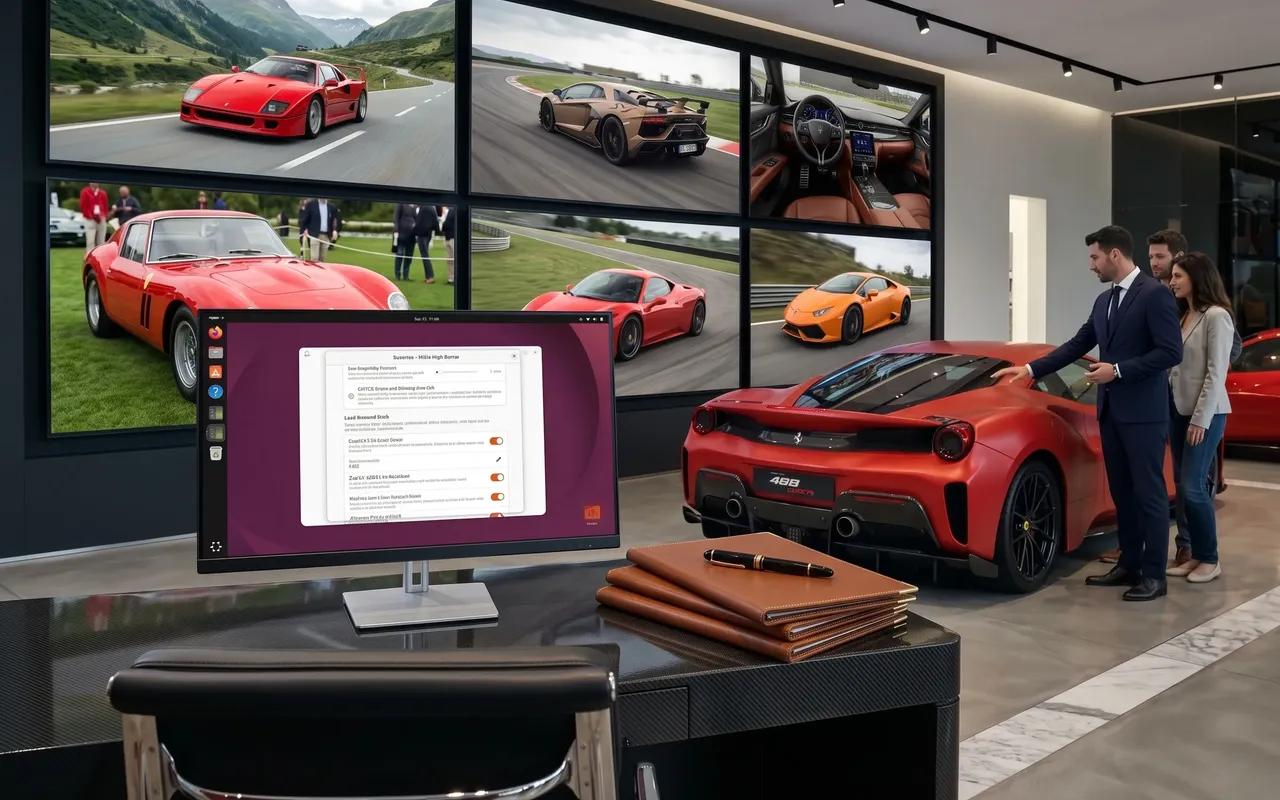
Providing truly end-to-end RevOps services requires control of the technology stack, which is why Doliven Group goes beyond GTM and serves as a system integrator. Most of its clients are small-to-midsize companies dealing in brick-and-mortar retail, where in-store conversions need all the help they can get. So, its digital signage solutions are quite popular. These solutions were previously delivered in the form of SBCs (single-board computers) programmed as dedicated, offline media players. While these devices were reliable and secure, they ultimately limited client satisfaction in the long term, because content updates relied on store managers. They also compressed margins by making lease agreements difficult to enforce, and by being feature-frozen the moment they shipped.
In 2026, the decision was made to outphase these units. Their replacement is the APED (all-purpose edge device), a compact AMD64 device designed to fulfill all stationary compute roles. APEDs can be deployed as workstations, kiosks, audio receivers, or video players, and they are always internet-connected. They are homogenous appliances, all UEM-provisioned via Endpoint Central Cloud and running a custom, Ubuntu-based LTS distro. This simplifies Doliven’s hardware inventory and enables more value to be extracted from every deployment.
I developed the video signage software solution. Rather than build it as a headless mode with remote activation, I built it into the standard Ubuntu desktop environment as a non-invasive feature, and made it open-source. The extension is called Sylepsis, which is a portmanteau of the words ‘syllepsis’ and ‘sign’ that references the functional combination of sign-age and sign-in. At the time of writing, it is the most robust GNOME extension of its kind.
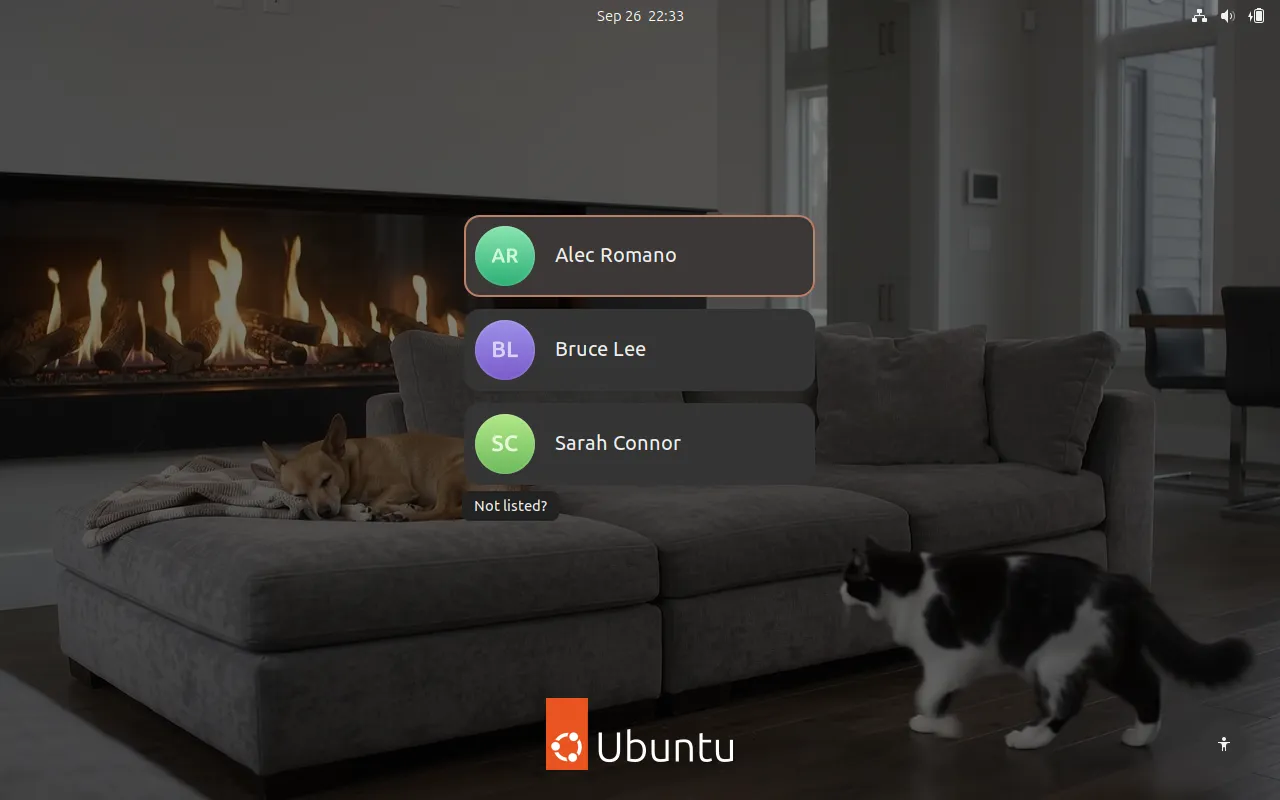
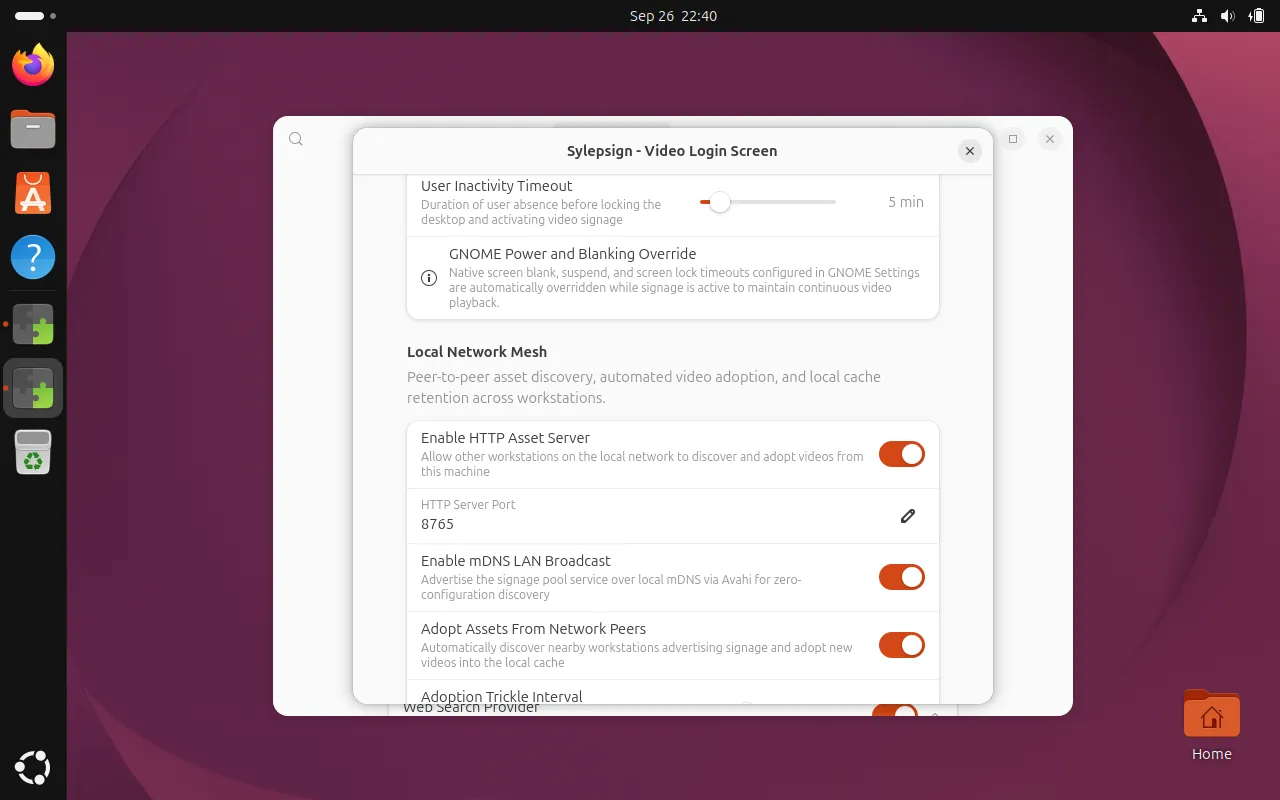
Sylepsign replaces the static background of GDM (GNOME’s sign-in screen) with seamless video playback, distributing different videos or duplicating them across multiple displays. Login options are presented as soon as user input is detected and hidden again when no one is using the machine. Optionally, it also replaces the normally-separate lock screen with the sign-in screen, creating a more consistent experience that is better suited to shared workstations.
In addition to the video playback engine, which is driven by MPV, Sylepsign incorporates a LAN media mesh powered by Avahi. Videos are sourced not only from the local disk, but also from other devices on the local network that have Sylepsign installed. This inclusion accommodates store managers who want control over their signage, allowing them to add new, store-wide content from any endpoint. Of course, content can also be updated remotely via any UEM system.