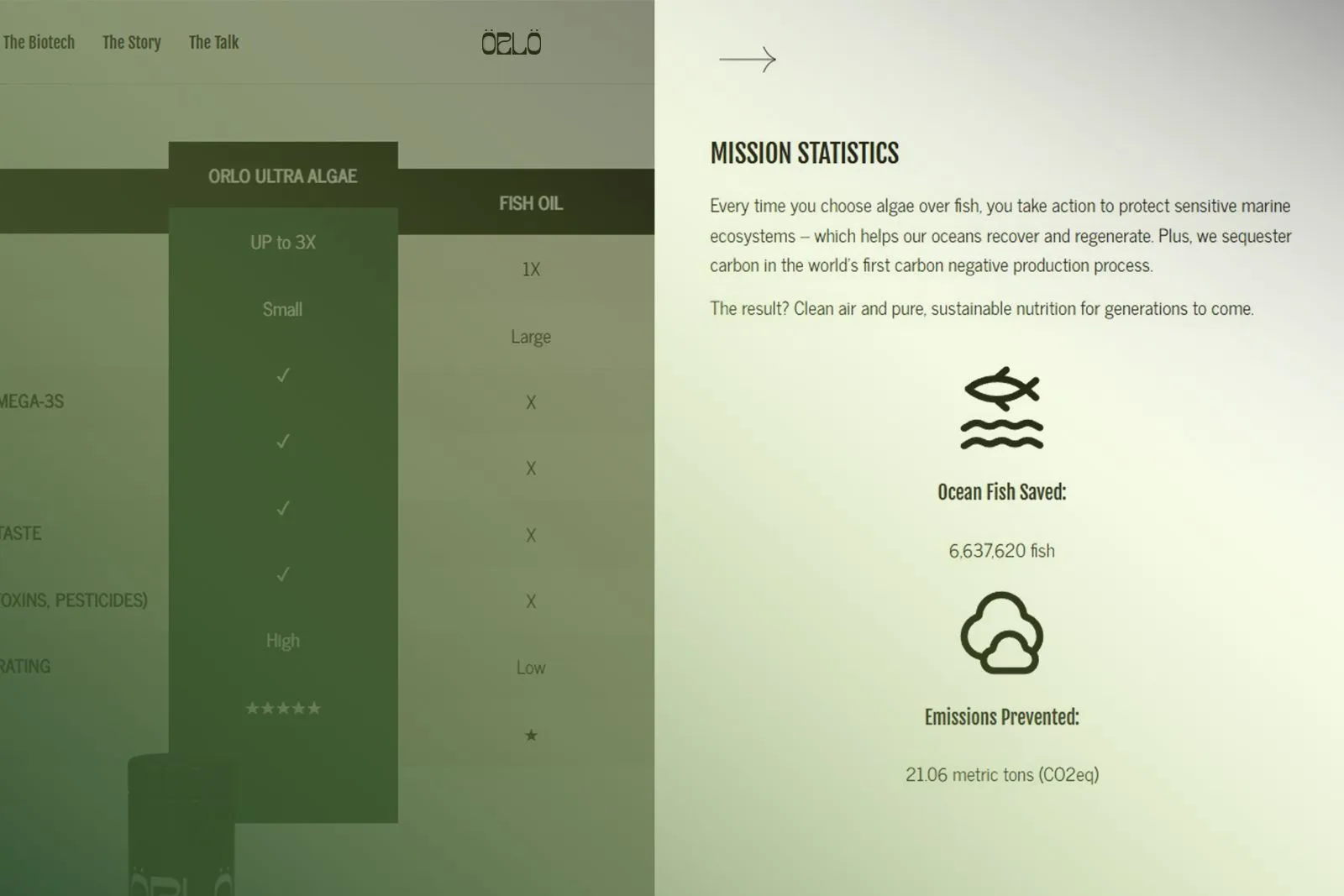
Örlö Impact Tracking
Zero-party data is the highest-trust signal a brand can capture. Unlike first-party behavioral data, which infers intent, zero-party data is willingly and intentionally shared by the customer. It is also the most defensible data asset a D2C brand can own as signal deprecation continues to erode third-party attribution models.
For Orlo, I built an impact tracking system directly into the Shopify purchase experience. Every product in the catalog carried a defined sustainability impact: fish spared, emissions prevented. When a customer completed a purchase, those variables were tallied automatically and contributed to publicly visible collective mission counters, as well as to individual account-level impact scores.
This system did three things simultaneously. First, it translated Orlo’s sustainability mission into a tangible, personal experience for the buyer, deepening brand connection and improving customer health score. Second, it created a social proof mechanism that contributed to organic acquisition. Third, the account-level impact accumulation laid the groundwork for a loyalty program anchored in mission alignment rather than transactional discounting.
The entire system was built without a single third-party plugin, running entirely on native Shopify functionality extended with custom code. That meant zero ongoing licensing cost, full data ownership, and complete portability.