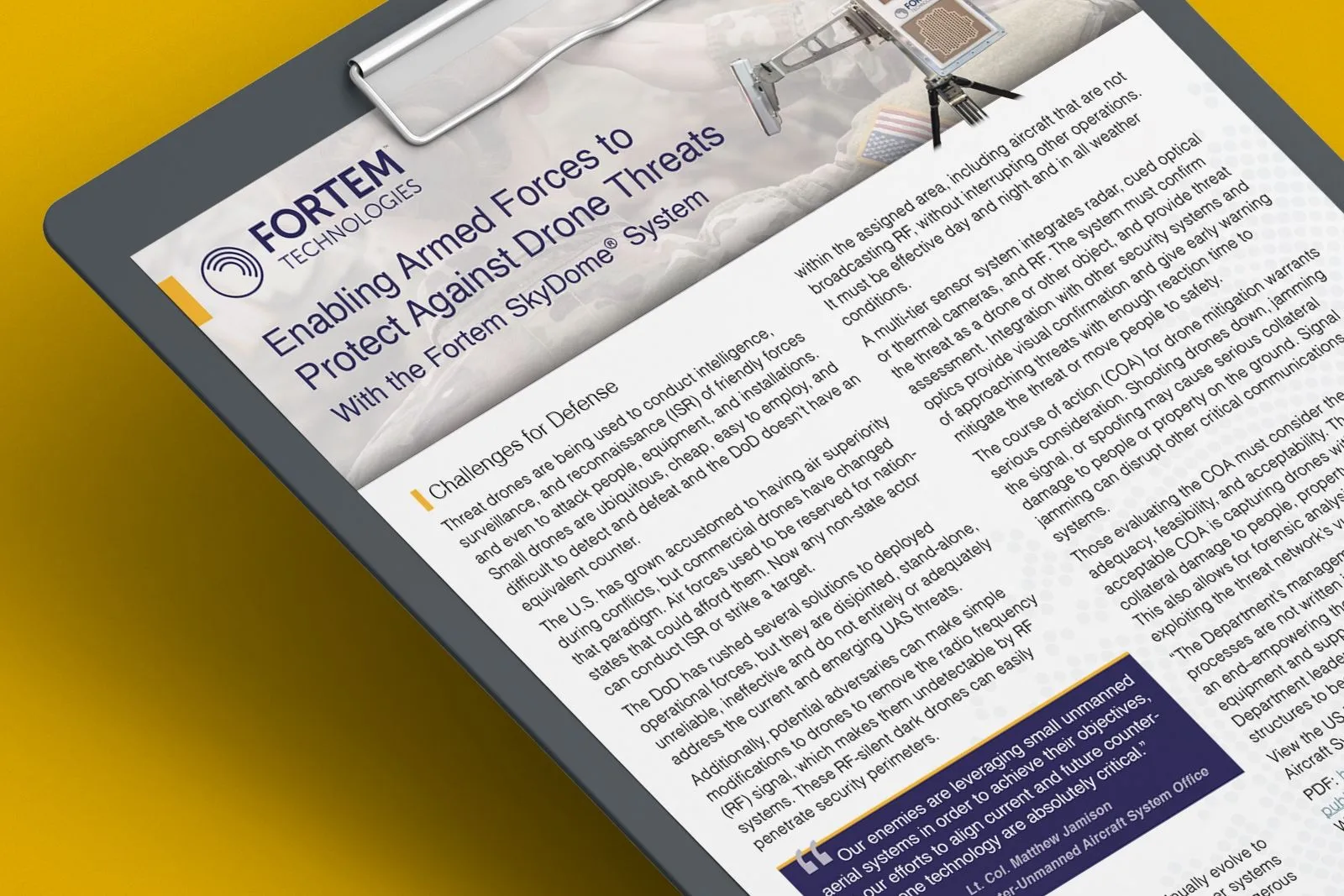
Vertical Solution Briefs
Selling dual-use deep tech into regulated public-sector and enterprise environments reveals an immediate friction point: generalized product overviews stall out when confronted with sector-specific procurement hurdles. While our underlying AI-enabled radar and counter-UAS platform remained consistent, each buying authority operated under distinct regulatory bounds, risk appetites, and operational mandates. An airbase commander prioritizes electronic warfare resiliency, low radar cross-section detection, and joint-all-domain integration; an airport authority evaluates FAA National Airspace System compliance and secondary ground-debris mitigation; municipal law enforcement assesses public safety liability and RF interference in dense urban corridors.
Treating complex multi-stakeholder evaluations with standard marketing one-pagers risks delegating the burden of justification to internal champions. To accelerate pipeline progression and de-risk deal stages, I designed and produced a modular suite of vertical solution briefs. Each brief re-anchored the technical capabilities of the SkyDome system into the operational language of a specific vertical: defense, civil aviation, critical infrastructure, and municipal security.
Rather than listing system specifications, the architecture of each brief was engineered as an objective decision matrix. We opened by diagnosing the unique threat profile and statutory constraints facing the target vertical, cited direct doctrinal directives and agency mandates to ground urgency, and mapped our radar, optical tracking, and physical defeat capabilities directly against their required courses of action.
To maintain production velocity across multiple verticals without sacrificing visual fidelity or brand authority, I established a rigorous modular content framework in InDesign and Illustrator. Content blocks, callout typography, operational schematics, and threat-matrix data tables were systemized into reusable grid layouts. This enabled rapid tailoring whenever emerging regulatory shifts or strategic accounts surfaced, turning what is traditionally an ad-hoc copywriting exercise into an agile collateral engine that delivered high-impact leave-behinds for technical champions navigating rigorous executive and legal reviews.